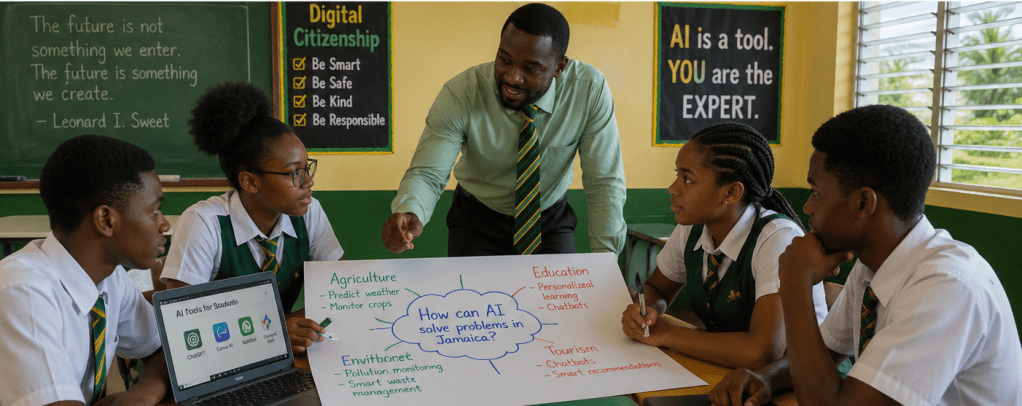
Education is entering a new era, shaped by artificial intelligence. Globally, teachers are leveraging AI tools to craft lesson plans, generate quizzes, offer feedback, analyze student performance, and tailor learning experiences (Tripathi et al., 2025). Likewise, students are increasingly relying on AI systems for tutoring, brainstorming, language support, and study assistance (Xiaoyu et al., 2025). Therefore, educational institutions are experimenting with AI-powered analytics, automated administration, and predictive systems to enhance efficiency and student success (Arias Ortiz et al., 2025).
The emergence of AI in Caribbean schools is a pivotal development. Education systems throughout the region are still grappling with enduring challenges, including unequal access to resources, overcrowded classrooms, inconsistent infrastructure, teacher migration, literacy and numeracy gaps, and constrained budgets (Bourne, 2025). Small island developing states frequently need to stretch their limited resources across geographically dispersed populations. In rural communities and on smaller islands, access to specialist teachers and advanced learning support is scarce. These circumstances create significant pressure but also heighten the urgency for innovation.
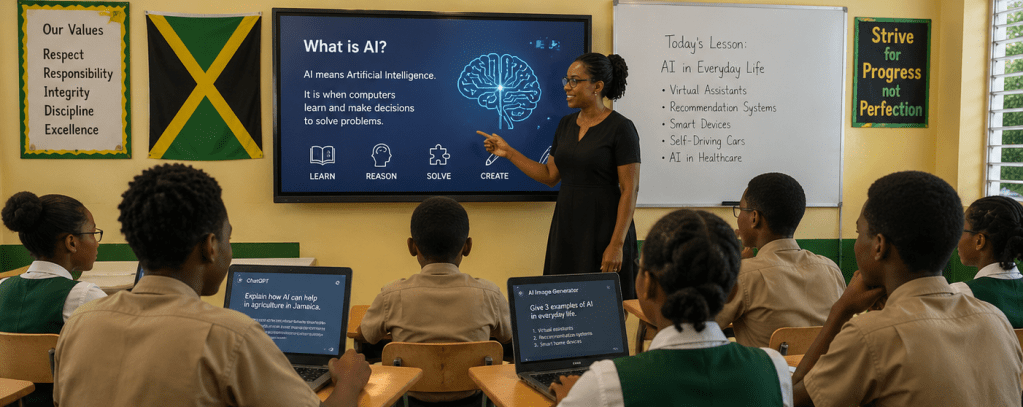
AI offers a substantial opportunity for the Caribbean to modernize its education systems and enhance outcomes without depending solely on costly traditional expansion models. A well-crafted AI strategy could enable teachers to save time, engage diverse learners, promote inclusion, and better equip students for the digital economy (Arias Ortiz and Giambruno Michelini, 2026). However, poorly planned adoption might exacerbate inequality, heighten surveillance, compromise academic integrity, and foster reliance on imported technologies that do not align with local realities (Fütterer et al. 2025).
The central argument of this article is that AI has the potential to greatly enhance Caribbean education systems, but its success hinges on teacher preparedness, equitable access, ethical governance, and strategic leadership. Technology alone cannot transform education; human capacity, sound policy, and regional collaboration are the decisive factors.
The Global Rise of AI in Education
The rapid expansion of AI in education has surged recently. Once an experimental technology, it has become increasingly mainstream. Teachers are utilizing generative AI tools to draft lesson materials, create examples, simplify texts, and develop assessments (Xiaoyu et al., 2025). Adaptive platforms can modify difficulty levels based on student performance, whereas AI tutoring systems offer instant feedback and personalized practice. Additionally, administrative systems assist with scheduling, reporting, and data management (Arias Ortiz et al., 2025).
Recent studies indicate that AI, when used thoughtfully, can alleviate repetitive tasks for teachers while enhancing the engagement of students. Systematic reviews of the use of generative AI in education have highlighted advantages such as expedited content creation, heightened student motivation, support for brainstorming, and opportunities for personalized feedback (Xiaoyu et al., 2025). Additionally, other research suggests that AI can aid in classroom management, attendance monitoring, and learning analytics when integrated with effective pedagogy (Fütterer et al., 2025).
Nevertheless, global experience demonstrates that technology is not a panacea for the aforementioned problems. Past educational technology reforms frequently faltered because policymakers prioritized devices over teacher training, curriculum alignment, or classroom implementation (Arias Ortiz et al., 2025). The implementation of AI without professional development or governance can lead to confusion and subpar outcomes. The lesson from international experience is unequivocal: AI thrives when it enhances effective teaching rather than attempting to replace it.
This global trend matters for the Caribbean because students and teachers are already exposed to these tools, whether formal systems adopt them or not. The question is no longer whether AI will influence education in the Caribbean. The real question is whether Caribbean systems will proactively shape this influence.
The Caribbean Context: Promise and Pressure
The Caribbean is stepping into the AI era with a mix of strengths and weaknesses. On the positive side, many Caribbean societies boast high levels of mobile technology adoption, increasing Internet usage, entrepreneurial cultures, and young populations adept at using digital tools. The swift expansion of online learning during and after the COVID-19 pandemic further boosted digital awareness across schools and universities.
Recent examples from Jamaica illustrate this growing momentum. Teacher workshops, supported by UNICEF Jamaica and partner organizations, have introduced 760 Jamaican teachers to AI tools for lesson planning, assessment creation, and enhancing classroom engagement (Tortello, 2025). Research on Jamaican teacher trainees revealed a strong interest in using AI for lesson planning, differentiation, and classroom preparation, with 85% of the trainees reporting positive teaching experiences when utilizing AI tools (Morris et al., 2025). These examples indicate that Caribbean educators are not resistant to innovation, and many are eager for practical support.
However, the region is grappling with significant challenges. Connectivity remains inconsistent, particularly in rural areas and among lower income households. While some schools boast a robust digital infrastructure, others contend with outdated devices, unreliable Internet, or insufficient technical support. Bourne (2025) found that AI adoption in Jamaica was predominantly concentrated in urban parishes, with several rural parishes experiencing minimal or no implementation. Teacher migration continues to disrupt staffing stability in various territories, especially in STEM and specialized subject areas. Budget constraints frequently delay procurement, maintenance, and reform.
This suggests that AI has the potential to serve as a bridge or barrier. When implemented strategically, AI can provide underserved schools with access to high-quality tools and support. However, if introduced unevenly, it may exacerbate the disparity between well-resourced schools and those that are already lagging behind.
Opportunities for Caribbean Schools
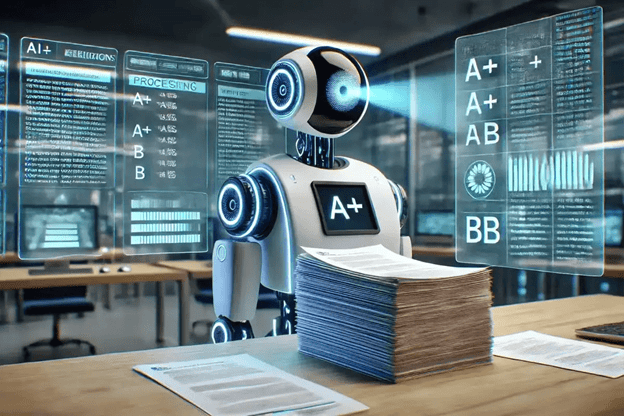
Teacher Productivity and Support: In the Caribbean, teachers frequently grapple with demanding workloads that extend beyond teaching. Tasks such as lesson planning, grading, report writing, communication, and administrative duties consume significant amounts of time. AI tools can alleviate this burden by creating initial drafts of worksheets, quizzes, rubrics, and reports, which teachers can then professionally refine (Tripathi et al., 2025; Xiaoyu et al., 2025). This is crucial because the time saved on repetitive tasks can be redirected towards more valuable activities, such as mentoring students, enhancing lesson delivery, providing personalized feedback, and fostering relationships. In systems experiencing teacher shortages or burnout, AI support can enhance sustainability and morale (Morris et al., 2025).
Personalized Learning: Caribbean classrooms often feature students with diverse abilities, literacy levels, learning speeds, and support needs. AI can assist teachers in differentiating instruction by creating various versions of activities, adjusting reading levels, and providing targeted practice (Morris et al., 2025). For instance, a teacher might use AI to develop simpler reading passages for struggling learners while crafting extension tasks for advanced ones. In numeracy, adaptive practice systems can offer personalized exercises. This approach does not replace teacher judgment; instead, it enhances teachers’ ability to address diverse needs.
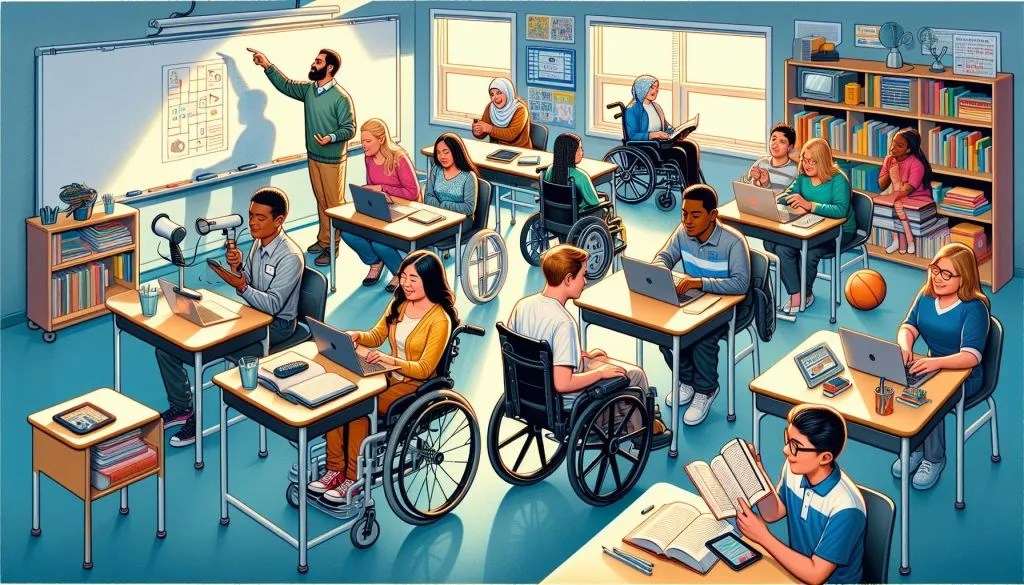
Inclusion and Accessibility: AI offers promising tools for promoting inclusive education. Technologies such as speech-to-text systems, translation tools, text simplification, and personalized support can assist students with disabilities or language barriers. Regional studies indicate that over a quarter of AI initiatives in Latin America and the Caribbean focus on inclusion and the continuity of learning (Arias Ortiz & Giambruno Michelini, 2026). In smaller states, where specialized human resources may be limited, carefully selected AI tools can enhance support services without entirely replacing the professional expertise.
Creativity and Entrepreneurship: The Caribbean economy is increasingly reliant on innovation, service industries, the reinvention of tourism, creative sectors, and entrepreneurship. AI can enhance creativity by assisting students in brainstorming ideas, prototyping business concepts, exploring design thinking, coding applications, and developing multimedia projects. Zhou and Peng (2025) discovered that the use of AI in teaching positively impacts student creativity, particularly when students are highly engaged in learning. This is crucial because education that prepares students for the future should assess more than just examination scores; it should also foster innovation and problem-solving.
Data-informed decision-making: Schools and ministries can leverage AI-enhanced analytics to discern attendance trends, detect early signs of disengagement, identify resource bottlenecks, and determine intervention needs. When used ethically, these systems can facilitate smarter decision-making and more effective allocation of limited resources (Arias-Oritz et al., 2025).
Risks and Challenges
The greatest risk may be unequal access. Students lacking reliable devices, Internet connectivity, or quiet study environments might be excluded from the benefits of AI. If wealthier schools advance rapidly while poorer schools fall behind, inequality will only deepen (Bourne, 2025).
Generative AI introduces new challenges in homework, essays, and assessments. Students may submit AI-generated work without understanding the content. Overreliance on AI could weaken writing, reasoning, and problem-solving skills if schools do not redesign their assessment methods (Tripathi et al., 2025; Xiaoyu et al., 2025).
Some educators may fear being replaced, feel overwhelmed, or lack the confidence to use AI tools. Without structured support, resistance may arise not from opposition to innovation but from inadequate preparations. Jamaican studies indicate that the willingness to adopt AI increases significantly when teachers receive training (Bourne, 2025; Tortello, 2025).
AI systems often depend on data collection, necessitating the careful protection of student information. Imported tools may also harbor cultural biases or decision rules that do not reflect the Caribbean context. Surveillance-heavy systems employing facial recognition or behavior monitoring raise additional ethical concerns (Fütterer et al., 2025).
Perhaps the most profound risk is using AI as a shortcut rather than as a learning tool. If students entirely outsource their thinking, the quality of education will decline. Schools must differentiate between productive assistance and passive dependence on help.
Preparing Caribbean Schools for the Future
Each Caribbean nation should develop a comprehensive AI education framework that addresses priorities, ethics, procurement, teacher development, and student use. Delaying this in favor of uncoordinated adoption leads to confusion (Arias Ortiz et al., 2025; Giambruno Michelini, 2026). Teachers require continuous training in AI literacy, prompt design, classroom integration, bias awareness, and critical evaluation. Professional development must be practical and tailored to specific disciplines of study. Research consistently indicates that teacher AI literacy significantly impacts successful implementation (Zhou & Peng, 2025; Morris et al., 2025).
Additionally, students should be taught to use AI responsibly, verify its outputs, cite their assistance, and engage in critical thinking. Assessment systems should prioritize reasoning, application, collaboration, and originality over mere reproduction (Tripathi et al., 2025). Governments should prioritize infrastructure investment in underserved schools, as connectivity, devices, and support systems are essential for equitable adoption (Bourne 2025). Teachers must remain central to the learning process, with AI serving to support, rather than replace, professional judgment. Human mentorship, emotional intelligence, and moral development cannot be replaced by automation (Tripathi et al., 2025). CARICOM, OECS, and regional universities could collaborate on teacher training resources, procurement standards, shared policy frameworks, and AI tools tailored to the Caribbean context, aligning with local curricula and cultures.
Conclusion
Artificial intelligence is no longer a distant prospect for Caribbean education; it is already making its way into classrooms through teacher experimentation, student use, and growing policy interest. This moment offers a unique opportunity for Caribbean states to learn from global successes and mistakes while crafting systems that are tailored to regional realities. AI can assist teachers in saving time, personalizing instruction, enhancing inclusion, fostering creativity and improving decision-making. However, if poorly managed, it can exacerbate inequality, encourage academic dishonesty, compromise privacy, and undermine critical thinking. The future of Caribbean education will not depend on whether schools adopt AI but on how wisely, fairly, and creatively it is implemented. By placing teachers at the center, investing in equity, safeguarding ethics, and embracing innovation with purpose, the region can harness AI as a powerful ally to prepare Caribbean students for the future.
References
Arias Ortiz, E., Castro, N., Forero, T., Gambi, G., Giambruno, C., Pérez-Alfaro, M., & Rodríguez Segura, D. (2025). AI and education: Building the future through digital transformation (Technical Note No. IDB-TN-03122). Inter-American Development Bank.
Bourne, P. A. (2025). Integrating artificial intelligence in education: Opportunities, challenges, and policy implications for Jamaica. International Journal of Recent Advances in Information Technology & Management, 9(1), 25–39.
Fütterer, T., Goldberg, P., Bühler, B., Sikimić, V., Trautwein, U., Gerjets, P., Stürmer, K., & Kasneci, E. (2025). Artificial intelligence in classroom management: A systematic review on educational purposes, technical implementations, and ethical considerations. Computers and Education: Artificial Intelligence, 9, 100483. https://doi.org/10.1016/j.caeai.2025.100483
Morris, S., Samuels, S., Morris, C., Ogeare, J., Ellis, A., Noble, R., White, C., Hamilton, A., Miller, J., Haye, K., Cunningham, D., Facey, D., Cunningham, S., & Jacobs, N. (2025). Navigating tomorrow’s Jamaican classrooms: Assessing the impact of AI on teacher training during teaching practicum in Jamaica. American Journal of Educational Research, 13(1), 1–16. https://doi.org/10.12691/education-13-1-1
Tortello, R. (2025, October 3). Jamaican teachers reimagine classrooms with AI and the Learning Passport. UNICEF Jamaica.
Tripathi, T., Sharma, S. R., Singh, V., Bhargava, P., & Raj, C. (2025). Teaching and learning with AI: A qualitative study on K-12 teachers’ use and engagement with artificial intelligence. Frontiers in Education, 10, 1651217. https://doi.org/10.3389/feduc.2025.1651217
Xiaoyu, W., Zainuddin, Z., & Leng, C. H. (2025). Generative artificial intelligence in pedagogical practices: A systematic review of empirical studies (2022–2024). Cogent Education, 12(1), 2485499. https://doi.org/10.1080/2331186X.2025.2485499
Zhou, M., & Peng, S. (2025). The usage of AI in teaching and students’ creativity: The mediating role of learning engagement and the moderating role of AI literacy. Behavioral Sciences, 15(5), 587. https://doi.org/10.3390/bs15050587


 Marie Bradford EdD.
Leave a comment