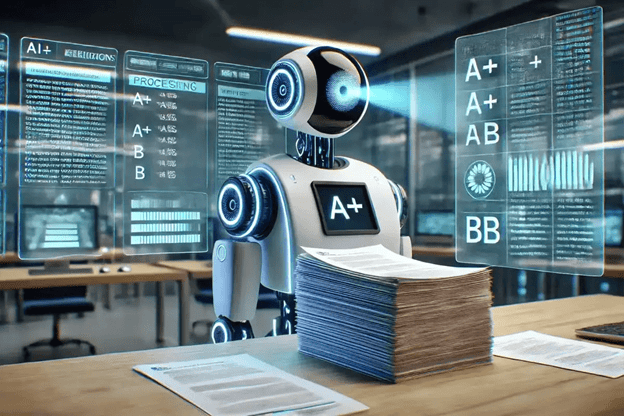
I have always been fascinated by new technologies. I have never been afraid of them because everything we enjoy today was once a novel invention. My smartwatch is my favorite gadget because it tracks my steps and provides me with a weekly summary of my activities. It also keeps an eye on my sleep patterns and provides an energy score for the day. I use this score to decide whether to lift weights or take a walk on my treadmill. Additionally, my smartwatch notifies me when my heart rate rises, signaling stress, and prompts me to breathe deeply or meditate.
I am sharing all this to emphasize the significant value of new and emerging technologies, which are meant to simplify and enhance our lives – or, at least, that is the hope. When generative AI emerged in 2022, I read a few articles to understand the concept. Upon learning that students were utilizing it, I registered with ChatGPT and began exploring its capabilities. Initially, I discovered that the free version could not upload and summarize documents, prompting me to upgrade to the premium version. I started using AI to create multiple-choice questions (MCQs) because crafting MCQs is notoriously challenging. I honed my prompting skills because my early attempts did not yield the desired outcomes.
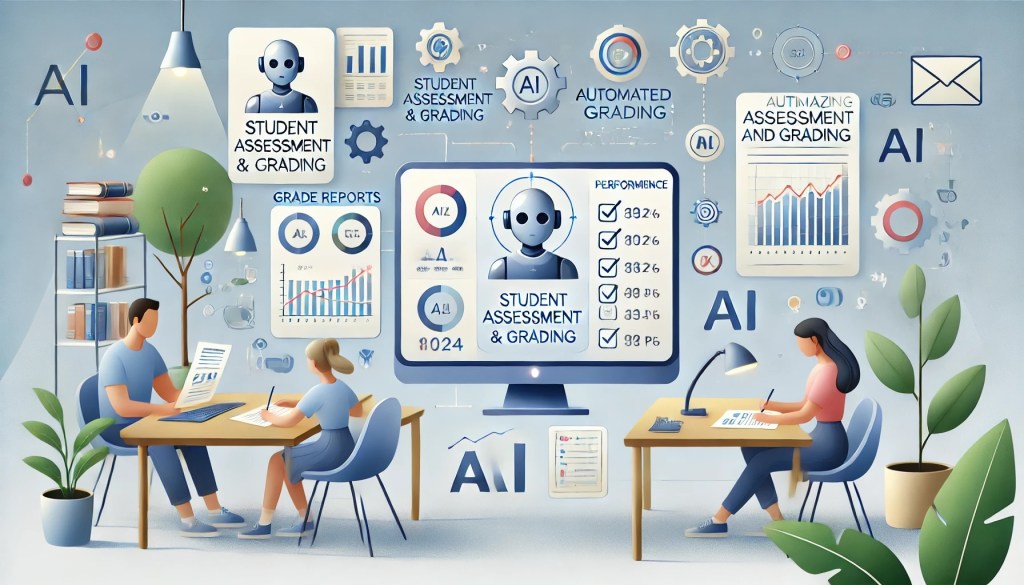
Eventually, I expanded its use to other types of assessment questions, such as essays and case studies. I will need to write a separate post about generating case studies. Additionally, I used AI to create the grading rubrics. I am a strong advocate for rubrics and always develop them, even for the simplest assignment tasks. Rubrics enabled me to evaluate all students using the same criteria. Because some students excel in certain areas while struggling with others, rubrics help minimize bias and ensure fair assessment. AI can produce excellent assessments; however, it is the teacher’s responsibility to provide effective prompts and refine the generated material to align with learning objectives and course content.
Grading assessments often take a lot of time, and many educators do not particularly enjoy this task. However, I am not one of them. I take pleasure in evaluating my students’ work because it gives me insight into what they have learned and highlights the areas I need to improve for future classes. For instance, if few students respond to a question or if most answers are incorrect, it indicates that I need to revise that question. Additionally, I find it rewarding when students provide excellent responses.
Generative AI is quite effective at evaluating assignments, particularly when students turn in digital versions. I will describe how I utilize AI for grading purposes. Imagine that I have a class or cohort consisting of 50 students.
- I use my 20 percent rule and grade the first ten papers manually.
- I upload the rubric used to mark the paper with a prompt such as “use the rubric attached to mark the papers that I will upload. Give a brief overview stating the reason for the grade assigned.”
- I upload the same 10 papers that I graded manually.
- Then compare my grade to the AI generated grade.
- I will address any discrepancies. For example, I may not agree with the grade that AI gave for one criterion.
- I then upload the other 40 papers individually and let AI generate the grades
- I scan through the assessments and check the AI grades for accuracy.
By not having to read all 50 papers, I saved a significant amount of time. My experience thus far shows that the grades generated by AI are either identical or very close to those I assign manually. Although it reduces the time spent grading, it does not compromise the credibility of the AI-assigned grades. I consistently ensure that 20% of the papers are graded manually, as this is the standard protocol. Allowing AI to grade all papers would be unfair to my students. Additionally, I perform a quick review of AI-graded papers to verify the fairness of the grades. Moreover, the rubrics are highly detailed.
Manual grading is unavoidable for handwritten tests and examinations. However, AI can assist by providing model answers and grading rubrics. To create the model answer, I uploaded my PowerPoint presentation or book chapter, if available, along with a detailed prompt to ensure that the AI was well-directed.
Thoughtfully incorporating AI into the grading process can lead to considerable time savings while preserving the integrity of the assessments. Educators can ensure fairness and reliability in their evaluations by manually grading representative samples and thoroughly reviewing AI-generated scores. Although manual grading is still crucial for handwritten work, using AI for digital submissions can streamline workflows and maintain grading standards. Ultimately, a balanced approach that combines human oversight with AI efficiency enhances the accuracy and credibility of academic assessments. Give it a try.


 Marie Bradford EdD.
Leave a comment