
Technical writers research, organize, and create clear, concise documentation that explains complex information to users. They write and edit manuals, online help systems, and other materials according to established standards of style and clarity. Their work involves gathering information from engineers and product teams, reviewing technical drawings and specifications, and selecting visuals such as diagrams or charts to support understanding. They also edit and revise existing documents, maintain records of changes, and collaborate with designers, publishers, and clients to ensure technical accuracy and professional presentation.
Skills
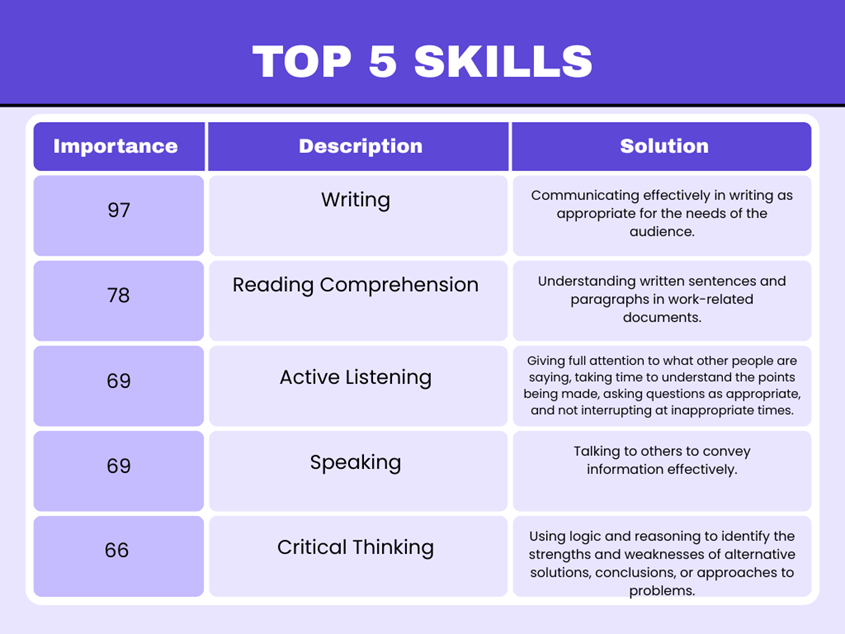
Technical writers possess a combination of strong communication, analytical, and organizational skills. Their most essential ability is to write clearly and effectively when communicating complex information to meet the needs of diverse audiences. They also rely heavily on reading comprehension to interpret technical materials accurately and active listening to gather information from subject matter experts. Speaking skills help them convey ideas and clarify technical details during collaboration. Equally important are critical thinking and judgment, which enable them to evaluate information, identify solutions, and make sound decisions about content accuracy and presentation. Technical writers must also engage in active learning to stay current with new technologies and methods. Strong time management, coordination, and monitoring skills ensure that they meet deadlines, work effectively within teams, and maintain high standards of quality in all documentation projects.
Technology skills
Technical writers use a diverse range of technology tools to plan, create, and manage technical documentation across multiple platforms. They rely on document and content management systems like Adobe Acrobat, Microsoft SharePoint, and Atlassian Confluence to organize files and collaborate efficiently, while version control tools such as Git and GitHub ensure accurate tracking of revisions. Writing and publishing are supported by desktop publishing and word processing software like Adobe FrameMaker, InDesign, MadCap Flare, and Microsoft Word. Many writers also use web development and formatting tools such as HTML, CSS, XML, and PHP to create and maintain online content. To enhance the visual quality of documents, they employ graphics and imaging programs including Adobe Illustrator, Photoshop, and Creative Cloud. Additionally, project management tools like Jira and Microsoft Project help track progress, while data and reporting software such as SQL Server, Oracle BI, and SAP Crystal Reports support information analysis. Together, these technologies allow technical writers to design clear, accurate, and visually engaging documentation that meets professional and technical standards.





 Site Title
Leave a comment